
 Phone/WhatsApp 008618939512185
 Email: info@hcrefractory.com
Phone/WhatsApp 008618939512185
Email: info@hcrefractory.com



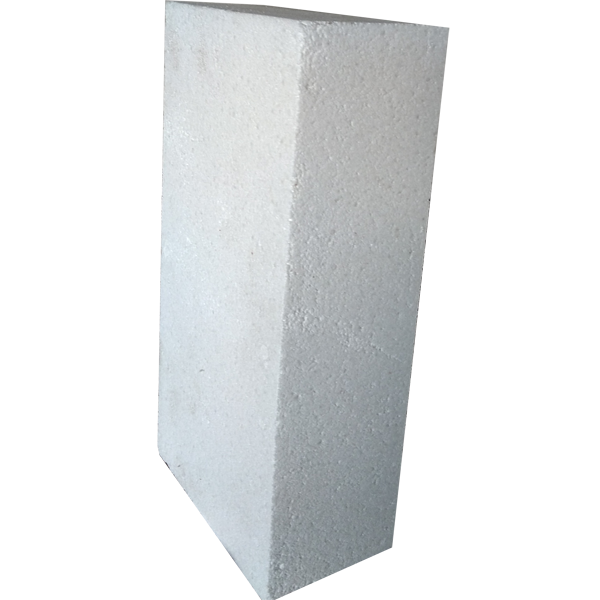
Alumina bubble brick
Model Number:AB-85,AB-90,AB-99
Certification:ISO 9001-14001
Minimum Order Quantity:5MT
Alumina bubble bricks description
Alumina hollow sphere is a new type of high temperature insulation material. It is made by melting industrial aluminum oxide in an electric furnace. The crystal form is a-Al2O3 microcrystal. The alumina hollow sphere is the main body, which can be made into various shapes. The maximum use temperature is 1800 °C, the mechanical strength of the product is high, which is several times that of the general lightweight product, and the bulk density is only one-half of the corundum product. It has been widely used in high-temperature and ultra-high temperature furnaces such as petrochemical industrial gasifiers, carbon black industrial reactors, metallurgical industrial induction furnaces, etc., and has achieved very satisfactory energy-saving effects.
Alumina bubble bricks are made of alumina hollow spheres and alumina powder as the main raw materials, combined with other binders, and fired at a high temperature of 1750 °C. They are a kind of energy-saving insulation materials for ultra-high temperature materials. Its high temperature is used to reduce the weight of the furnace and save materials and energy. It is mainly used for lining of high temperature kiln in refractory materials, industrial ceramics, electronic ceramics, petrochemical industry, metallurgy and other industries and insulation materials for ultra-high temperature kiln.
Alumina bubble bricks | HCR AB-85 | HCR AB-90 | HCR AB-99 | |
Chemical composition | Al2O3 | ≥85 | ≥90 | ≥99 |
SiO2 | ≤13 | ≤8 | ≤0.2 | |
Fe2O3 | ≤0.5 | ≤0.5 | ≤0.5 | |
Apparent porosity% | 58-62 | 58-62 | 58-62 | |
Bulk Density g/cm3 | 1.4-1.7 | 1.4-1.7 | 1.4-1.7 | |
Cold Crushing Strength MPa | ≥12 | ≥10 | ≥9 | |
Refractoriness under Load ℃(0.2MPa T2) | ≥1650 | ≥1700 | ≥1700 | |
Permanent Linear Change On Reheating(%)1500℃X2h | ± 0.3 | ± 0.3 | ± 0.3 | |
Coefficient of thermal expansion 20~1300 ℃X10-6 | 0-7.8 | 0-8.0 | 0-8.6 | |
Thermal conductivity 800℃,W/M.K | ≤0.8 | ≤1.3 | ≤1.5 | |
1680 | 1700 | 1800 | ||
