
 Phone/WhatsApp 008618939512185
 Email: info@hcrefractory.com
Phone/WhatsApp 008618939512185
Email: info@hcrefractory.com



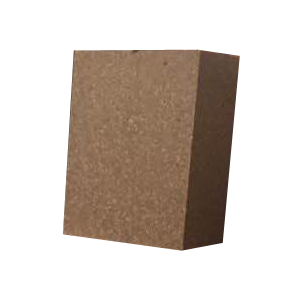
magnesia alumina spinel brick
Model Number:MAJ-75,MAJ-80,MAJ-84
Certification:ISO 9001-14001
Minimum Order Quantity:5MT
Magnesia alumina spinel brick description
The magnesia-aluminum brick is dominated by periclase, and the magnesia-alumina is used as the matrix, which contains Al2O3 5%~10%, which is superior to the magnesia brick in thermal shock resistance.In order to improve the thermal shock resistance of the magnesia brick, alumina or bauxite clinker fine powder is introduced into the furnish to form a magnesium aluminum spinel matrix, thereby preparing a magnesia-aluminum brick. Magnesium-aluminum bricks are characterized by good thermal shock resistance and high softening temperature. As the Al2O3 content increases, the apparent porosity of the brick increases. However, when the Al2O3 content is less than 10%, the brick is still dense, and the apparent porosity is up to 14%, generally 15% to 18%.
When the Al2O3 content is less than 20%, the elastic modulus of the magnesia-alumina brick decreases with the increase of Al2O3 content in the brick. When the Al2O3 content is 4%~10%, it is generally 0.42Mpa, which is only magnesium brick (1.20Mpa). one third. The coefficient of variation of linear expansion coefficient of magnesium-aluminum brick is similar to that of elastic modulus. When Al2O3 content is 4%~10%, it is generally 10.6*10^(-6)(20-1000°C), compared with magnesia brick (13.0*10). ^(16)) is reduced by about 20%.The starting temperature of the load-softening of magnesium-aluminum bricks is related to the content of impurities in the bricks. It initially increases with the increase of Al2O3 content. When the content of Al2O3 is 3%~10%, it has a higher value; when the content of Al2O3 exceeds 10%, it begins to decrease. The loading softening start temperature (loading 0.2 Mpa) of high-purity magnesium-aluminum brick (MgO+Al2O3 content above 97.5%) can reach above 1750 °C, generally 1600 °C. Before 1000 ° C, the modulus of elasticity of the magnesia-aluminum brick increased with increasing temperature, and dropped sharply above 1000 °C.Magnesium-aluminum bricks begin to plastic flow from 1000 °C, which is more obvious at 1200 °C, and the flow accelerates at 1300 °C. These are similar to magnesia-chrome bricks and different from magnesia bricks, and the flow temperature is higher than that of magnesia bricks. °C. When the amount of alumina added is less than 15%, the magnesium-aluminum brick does not expand with the action of iron oxide; when it is added at 15%, it exhibits micro-expansion; at 20%, it is more obvious; at 28%, it is severely expanded. The slag resistance (flat slag) increases as the amount of alumina added increases.
Brand Properties | Magnesia Alumina Spinel brick | |||
MAJ-75 | MAJ-80 | MAJ-84 | ||
Bulk Density (g/cm3) | 2.90 | 2.95 | 2.95 | |
Cold Crushing Strength(MPa) | 45 | 45 | 60 | |
Apparent Porosity (%) | 19 | 19 | 18 | |
Thermal Shock Resistance at 1,100℃ water cooling | 12 | 15 | 20 | |
Refractoriness under Load ℃(0.2MPa T2) | 1600 | 1700 | 1750 | |
Chemical Composition (%) | MgO | 75 | 80 | 84 |
Al2O3 | 8 | 12 | 14 | |
Main Applications | - Metal Line, Free Board for General Ladle - Permanent Line for Ladle (Wall) - firing zone in rotary kiln - upper and lower transition zone for rotary kiln | |||
